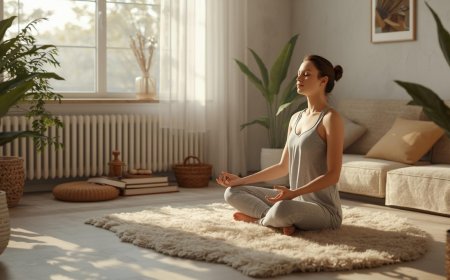








Easy Meditation Practices for Everyday Calm – Simple Mindfulness for Daily Peace
Discover simple and effective meditation practices you can do anytime to create daily calm. Learn easy breathing, mindfulness, and relaxation techniques perfect for beginners.


Easy Meditation Practices for Everyday Calm
Life can feel like a constant wave of motion—tasks, conversations, notifications, responsibilities, decisions, and a never-ending sense that there’s more to do. In the midst of all this, meditation becomes not a luxury, but a life raft. It’s a gentle way of returning to yourself, grounding your mind, and creating space inside your day for peace to enter.
But many people imagine meditation as something complicated or time-consuming. They picture long silent sessions, elaborate rituals, or perfect posture on a cushion. The truth is, meditation can be simple, approachable, and woven seamlessly into everyday life. It doesn’t require special training, hours of practice, or a quiet mountaintop. It only requires a willingness to pause and breathe.
In this blog, you’ll discover easy meditation practices designed for real life—busy mornings, stressful afternoons, restless evenings, and everything in between. These techniques are meant to help you cultivate calm in just a few minutes a day, no matter where you are or what you’re doing.
Let’s explore practical ways to add meditation into your routine and invite everyday calm back into your world.
1. The One-Minute Breathing Reset
Meditation doesn’t need to be long to be effective. A single minute of intentional breathing can quiet your mind and signal your nervous system to relax.
Try this simple practice:
- Sit or stand comfortably.
- Close your eyes or soften your gaze.
- Inhale slowly for four seconds.
- Exhale slowly for four seconds.
- Repeat for one minute.
As you breathe, imagine your inhale clearing space and your exhale releasing tension. Your heart rate slows, your mind steadies, and your body softens.
This micro-meditation is perfect for transitions—before a meeting, after a stressful conversation, or whenever your mind begins to race.
2. The Sensory Grounding Meditation
This is one of the easiest ways to drop into the present moment, especially when your mind feels scattered. Sensory grounding works by tuning into your physical senses, bringing you out of anxious thoughts and into your body.
Use the 5-4-3-2-1 method:
- 5 things you can see
- 4 things you can touch
- 3 things you can hear
- 2 things you can smell
- 1 thing you can taste
You can do this anywhere—your living room, your office, your car, or while taking a walk. It gently pulls your awareness out of mental noise and into what’s real and present around you.
3. The Morning Sunlight Meditation
If you struggle with stressful mornings, this is a perfect grounding ritual. It takes just a few minutes and helps set a calm emotional tone for the day.
Here’s how to practice it:
- Stand or sit near a window—or outdoors if possible.
- Close your eyes briefly and breathe slowly.
- Feel the light on your skin, even if it's soft or filtered.
- Allow the warmth or brightness to anchor you.
- Imagine the light filling your body with clarity and ease.
This meditation wakes up your senses gently and encourages a peaceful beginning rather than rushing into your day.
4. The Walking Meditation
If sitting still feels difficult, walking meditation is a wonderful alternative. It transforms something you already do into a calming and mindful practice.
To try it:
- Walk at a comfortable pace.
- Notice the feeling of your feet touching the ground.
- Observe your steps: heel, arch, toe.
- Keep your gaze soft and your breath steady.
- If your mind drifts, return your focus to the rhythm of walking.
Even 3–5 minutes of mindful walking can clear mental fog and ground your emotions.
5. The Gentle Body Scan
A body scan is a form of meditation that invites you to check in with your physical self. Tension often hides in areas we don’t notice—shoulders, jaw, stomach, neck. This practice helps release it.
Try this:
- Sit or lie down.
- Close your eyes and breathe deeply.
- Bring awareness to your toes, then slowly move upward.
- Notice sensations, tension, or warmth.
- With each exhale, imagine releasing tightness from each area.
This meditation is especially soothing before bed or after a long day.
6. The “Noticing Your Thoughts” Meditation
Instead of trying to silence your thoughts, this practice teaches you to observe them without getting pulled in. This reduces mental stress and helps you respond rather than react to situations.
Here’s how to practice:
- Sit quietly and breathe naturally.
- When a thought comes up, notice it without judgment.
- Imagine your thought as a cloud passing across the sky.
- Let it drift away and return to your breath.
The goal isn’t to stop thinking—it’s to stop holding each thought so tightly. This creates mental space and emotional balance.
7. The Gratitude Pause Meditation
Gratitude is one of the simplest ways to elevate your mood, and combining it with meditation makes it even more powerful.
Try this short practice:
- Close your eyes and take a slow breath.
- Think of one thing—just one—that you’re grateful for.
- Feel the warmth of that gratitude in your chest.
- Breathe into the feeling for a minute or two.
This meditation shifts your focus from stress to appreciation, creating an emotional reset.
8. The Breath-Counting Meditation
If you struggle with distraction, counting your breaths can help anchor your mind.
Here’s how to do it:
- Sit comfortably and inhale naturally.
- As you exhale, count “one.”
- Inhale, then count “two” on the next exhale.
- Continue until you reach ten, then begin again.
If your mind wanders, gently return to “one” without frustration. This brings focus and stillness into your day with minimal effort.
9. The Mini Mantra Meditation
Mantras are simple words or phrases that calm the mind and anchor your attention. They can be spoken silently or quietly aloud.
Choose a short phrase like:
- “I am calm.”
- “I am safe.”
- “I release.”
- “Peace is here.”
- “Inhale strength, exhale tension.”
Repeat the mantra as you breathe. The repetition helps quiet mental chatter and replaces it with calm intention.
10. The Evening Release Meditation
At the end of the day, it’s common to carry emotional weight—unfinished tasks, worries, or tension. Evening meditation helps you release what you no longer need to hold.
Try this gentle practice:
- Sit or lie in a comfortable position.
- Inhale deeply.
- On each exhale, imagine placing your stress into the air and letting it dissolve.
- Mentally say, “I release today.”
- Continue for a few minutes, letting your body soften.
This meditation promotes relaxation and smoother transitions into rest.
Bringing Calm Into Your Everyday Life
Meditation becomes truly powerful when practiced consistently, even in small doses. You don’t need a perfect setup or long sessions—you just need presence and intention. Over time, these easy practices strengthen your emotional resilience, steady your nervous system, and create more space for peace in your day.
What matters most is not how long you meditate, but how often you return to yourself—through breath, awareness, softness, and compassion.
Even a few moments of meditation each day can transform the way you experience your life, one calm breath at a time.
What's Your Reaction?