











How to Start a Creative Journal | ChillBloom Guide to Creativity & Self-Expression
Learn how to start a creative journal with ChillBloom. Discover practical tips, creative exercises, and inspiring ideas to express yourself, boost creativity, and grow personally.

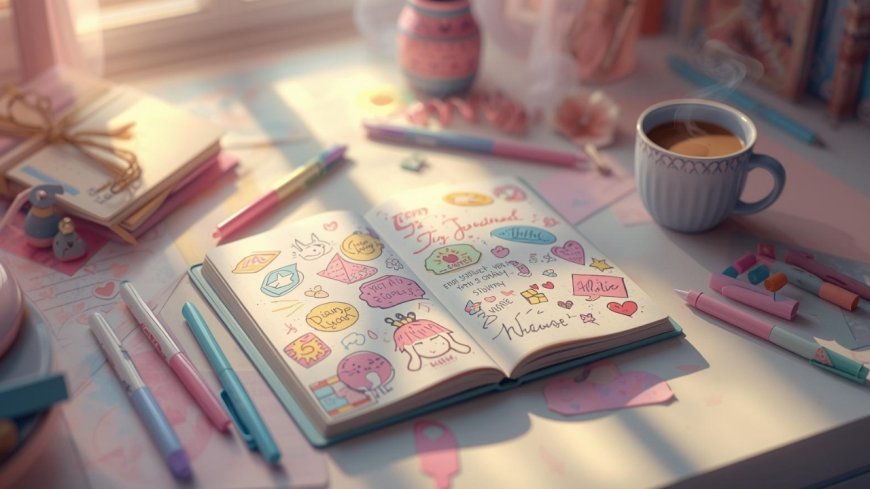
How to Start a Creative Journal
There is something magical about a blank notebook. It holds possibility. It invites imagination. It has no rules, no expectations, no judgment—just an open space waiting for your thoughts, your sketches, your ideas, your emotions, your experiments, and your creativity. A creative journal is more than a diary; it’s a private playground for the mind and heart. It’s where structure and spontaneity meet. It’s a space to express yourself freely, with curiosity instead of pressure.
If you’ve ever wanted a practice that helps you grow your creativity, calm your thoughts, and document your inner world, creative journaling is a beautiful place to begin.
This guide will walk you through the foundations, approaches, tools, tips, and mindset shifts you need to start your own creative journal with confidence and joy.
What Is a Creative Journal?
A creative journal is a personal notebook used for imagination-centered expression rather than traditional documentation. Unlike a planner or diary, this journal encourages diversity in content. It can include:
- doodles
- poems
- quotes
- ideas
- lists
- sketches
- reflections
- collage
- color
- photographs
- dreams
- goals
- inspirations
It evolves as you evolve.
There are no formatting expectations and no required order. Every page can be different, every entry unique. It's fluid, flexible, and deeply personal.
Why Creative Journaling Matters
Creative journaling doesn’t just fill pages—it fills your inner world.
1. It keeps creativity active
Creativity isn’t a lightning bolt—it’s a habit. Regular journaling strengthens your imagination the way exercise strengthens muscle.
2. It reduces stress
A creative outlet diffuses emotional weight and relieves internal tension.
It quiets mental noise.
3. It helps you make sense of thoughts
Sometimes you don’t know what you feel until you write it down… or draw it.
4. It supports self-discovery
Patterns emerge.
Themes repeat.
Insights appear.
5. It gives you a safe space
No rules.
No audience.
Just you.
Step 1: Choose Your Journal Format
There are many ways to do this—pick what feels enjoyable, not overwhelming.
Option A: Physical Notebook
Ideal if you enjoy paper texture, pens, or crafting.
Choose based on:
- size
- paper thickness
- binding
- blank vs lined vs dotted
Option B: Digital Journal
Perfect if you prefer your tablet or laptop.
Apps to consider:
- note applications
- drawing apps
- hybrid planning tools
Option C: Combination
Some entries on paper.
Some digital.
No problem.
Your journal should fit your lifestyle—not the other way around.
Step 2: Gather Tools That Inspire You
Don’t overthink supplies—simple is enough.
Useful creative tools include:
- colored pens
- markers
- watercolors
- pencil
- stickers
- glue
- printed photos
- washi tape
- clippings from magazines
If you prefer minimalist journaling:
a single pen is all you need.
In truth, the most important tool is intention.
Step 3: Create a Ritual Around It
The act of journaling becomes easier when tied to moments.
Consider:
- morning journaling with tea
- nighttime journaling before bed
- weekly creative sessions
- weekend reflection time
- lunchtime art break
A ritual signals your brain:
“this is my space to slow down.”
You don’t need long sessions.
Even 5 minutes can be powerful.
Step 4: Start Simple, Not Perfect
A common mistake is expecting instant brilliance.
Creative journaling does NOT require:
- polished entries
- consistent themes
- beautiful handwriting
- perfect art
The most liberating approach is letting yourself experiment.
Start with:
- random doodles
- single words
- song lyrics stuck in your head
- messy lists
- half-developed thoughts
Your journal will grow into itself.
Step 5: Experiment With Styles
Creative journaling is diverse and playful.
Try incorporating different types of pages like:
Vision pages
Your future goals, dreams, adventures.
Mood maps
Energy, feelings, patterns, triggers.
Creative word pages
Freewriting
Poetry
One-sentence entries
Memory collections
Photos
Ticket stubs
Letters
Receipts
Collage spreads
paper
fabric
texture
Theme pages
books
nature
travel
seasons
Creative prompts
“What inspired me today?”
“If I could create anything…”
“My dream version of myself…”
Let pages develop organically, not rigidly.
Step 6: Use Prompts When Stuck
Creative blocks are normal.
Prompts can break the pause and restart the flow.
Examples:
- something beautiful I noticed today…
- one thing I’m dreaming about…
- colors that express how I feel…
- places I want to visit…
- ideas that excite me…
- things I want less of…
- things I want more of…
- my next project…
- what I want to learn…
- what made me smile…
Prompts don’t restrict.
They unlock.
Step 7: Let Your Journal Reflect Your Mood
Some days you might create vivid pages filled with color.
Some days you might want monochrome minimalism.
Some days you may write a single sentence.
That flexibility is the essence of creative journaling.
There is no wrong way to show up.
Step 8: Embrace Imperfection With Gratitude
This may be the most important mindset shift:
Let your journal be imperfect.
Because:
Creativity thrives in freedom.
Fear thrives in perfectionism.
Over time your journal becomes a visual archive of growth—not flawlessness.
Every messy page matters.
Every crooked line matters.
Every half-finished thought matters.
It’s all part of the journey.
Step 9: Review Your Pages Occasionally
Revisiting old entries reveals:
- how much you’ve grown
- themes you repeat
- ideas you forgot
- patterns you missed
- dreams you’re building
- creativity expanding
A creative journal becomes a mirror over time.
It shows you how alive your imagination is.
Step 10: Let It Be a Joy, Not a Task
Creative journaling should not feel like homework.
If you skip days…
or weeks…
that’s okay.
Return when it feels right.
Journal with love,
not pressure.
Ideas for First Entries
Here are easy starting options:
✔ Page of color swatches
✔ A quote you love
✔ A list of things inspiring you
✔ A collage of magazine cutouts
✔ A poem written in 3 minutes
✔ Shapes and lines
✔ Gratitude spread
✔ Single-word mood page
✔ Photos from your week
✔ A page about nothing at all
There is beauty in simplicity.
How Creative Journaling Supports Mental Well-Being
Journaling helps you slow down.
It encourages presence.
It quiets overstimulation.
It gives emotions an outlet.
It soothes anxiety.
It strengthens identity.
It nurtures wonder.
It restores imagination.
It is comfort on paper.
Your Journal Is a Private Sanctuary
No approval needed.
No audience required.
No expectations to meet.
Your creative journal is YOUR inner space.
A secret garden,
personal universe,
emotional home.
Let it become a companion to your life.
Final Thoughts: Start Where You Are
You don’t need to feel artistic to begin.
You don’t need to have a plan.
You don’t need perfect supplies.
You only need willingness.
One page at a time,
you build connection with yourself.
One page at a time,
you grow your creativity.
One page at a time,
you write your story.
So find a notebook.
Open it gently.
Take a breath.
Begin.
And enjoy watching yourself unfold on the page.
What's Your Reaction?


